
Taj Mahal quartzite: the real thing, and the stones that borrow its name
Few stones have risen the way Taj Mahal quartzite has. A decade ago it was a specialist's pick; today it is the name we hear more than any other on the gallery floor. The look explains part of it, warm and creamy with soft, quiet movement that suits almost any kitchen. The durability explains the rest. But that popularity has a side effect worth understanding before you choose: not everything sold as "Taj Mahal" actually is.
The stone everyone suddenly wants
Taj Mahal has become one of the most requested surfaces in the country, and its rise has been unlike anything we have seen in natural stone. Part of the appeal is how it looks: a soft ivory-to-champagne background with gentle veining that reads as calm rather than busy, so it settles into a traditional kitchen and a modern one alike. The other part is how it behaves. As a quartzite it is generally hard and stands up to real daily use far better than the marble it resembles, which is exactly the combination most people are after. We would never tell you any stone is indestructible, but that balance of look and toughness is why demand has climbed the way it has.
Where it actually comes from
Original Taj Mahal comes from Brazil, and here is the part most people never hear: it is cut from a single quarry. From that one quarry, only six factories in the world process the blocks, and those six supply every genuine Taj Mahal slab on earth. That is the real reason it commands the price it does. This is not a stone being churned out in volume to meet the demand. The demand has simply outrun a genuinely finite source.
How we carry it, and how we grade it
We import Taj Mahal directly, from four of those six factories, which lets us choose blocks at the source rather than take whatever reaches a distributor. We bring it in three finishes, polished, honed, and leathered, so the same stone can read glossy and bright or soft and matte depending on the room.
We carry it in three grades, and the honest picture matters:
- Taj Mahal Extra and Taj Mahal Premium are both original Taj Mahal, both first-choice quality. These are the grades most projects are choosing between.
- Taj Mahal Ultra Premium is also original Taj Mahal, cut from the very best blocks the quarry produces. We only see these every once in a while, so when a lot arrives it does not stay long.
The look-alikes, and why the name matters
Here is where the market gets muddy. Because Taj Mahal sells, plenty of distributors label anything close to it "Taj" and charge the Taj premium for it. We do not. At CRS, only original Taj Mahal is called Taj Mahal.
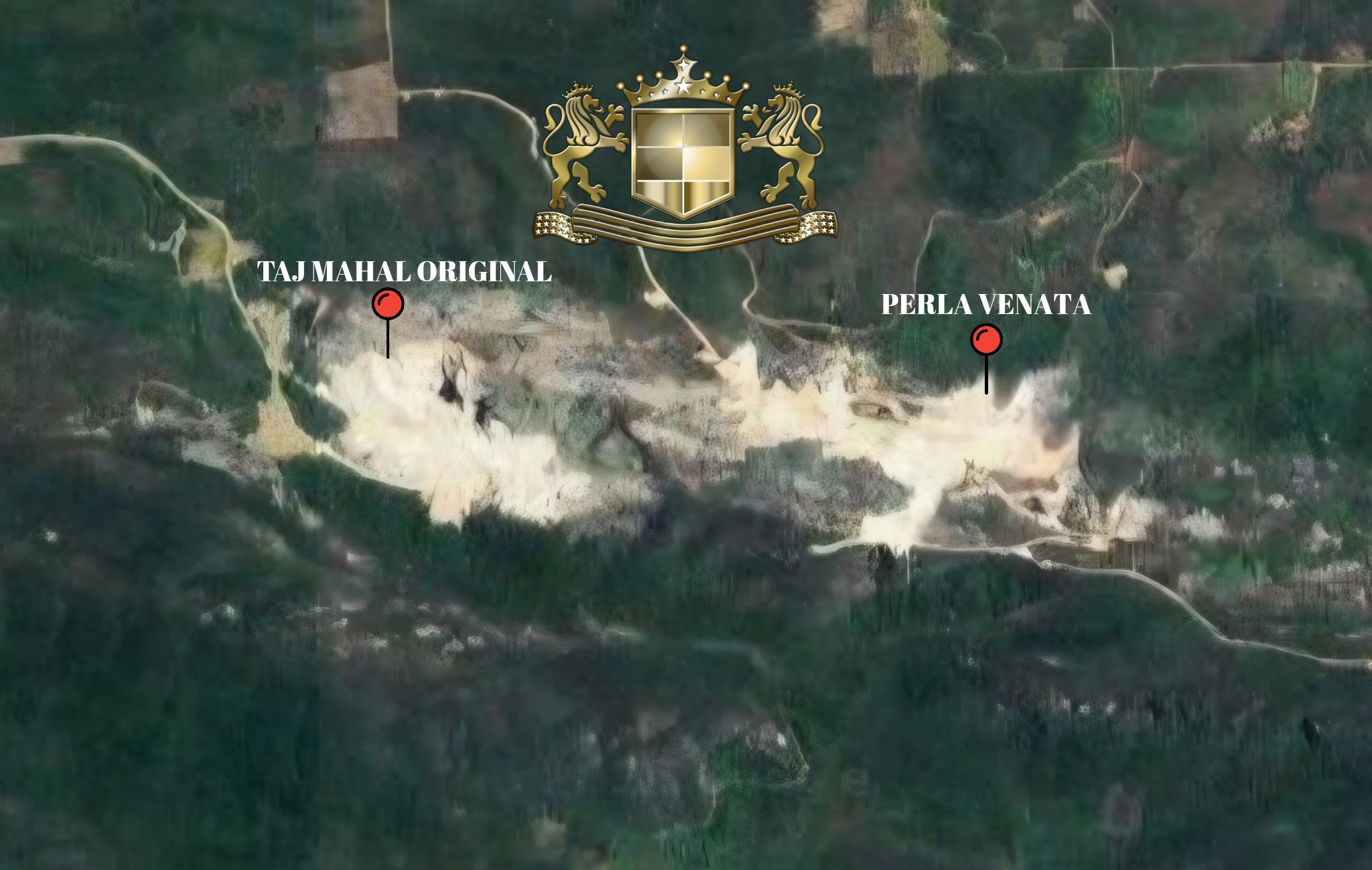
Several stones resemble it, and they are not all equally close. Perla Venata is the nearest, because it is cut from the same mountain as the original Taj, so the family resemblance is real. Matira comes from the same area but a different mountain. Others, among them Nyca, Perla Santana, Montebello, and Taj Ganj, come from a different area altogether, and the likeness loosens the farther you go. None of them are the original stone, and you deserve to know which is which before you pay for one.
The one look-alike we carry, named honestly
Of all the look-alikes, we carry one: Perla Santana, the lightest and the best in quality of the group. We sell it as Taj Mahal Santana, one level below original Taj Mahal in price, and we tell every client exactly what it is. It is a genuinely lovely stone and a smart choice for the right budget, but it is not original Taj, and naming it plainly is the whole point. You should always know whether you are buying the real thing or a relative of it.
The best way to understand any of this is to stand in front of the slabs. Come see original Taj Mahal in our Austin gallery, in all three finishes, next to Taj Mahal Santana, and judge the difference for yourself. Walk in during showroom hours or book a viewing. Either way it is free, and we will tell you honestly what each stone is and where it came from.